

By Steven Hillion, deputy director of BARNES Mont-Blanc.
Between the Jura mountains and the Geneva basin, the Pays de Gex holds a unique place in the French property market. Its appeal rests on a combination of factors rarely found together: proximity to Geneva, an international job market, the high purchasing power of part of its population and an exceptional residential setting.
Yet behind property prices that remain high, the area is undergoing profound change. Uncertainty over jobs in international organisations, new lending conditions, currency fluctuations and the growth of new-build developments are gradually reshaping the balance of the market.
A residential market before a luxury market
The first distinctive feature of the Pays de Gex lies in the nature of its buyers.
Unlike some traditional prestige property destinations, where a significant share of purchases are second homes or wealth investments, the Pays de Gex is above all a market of main residences.
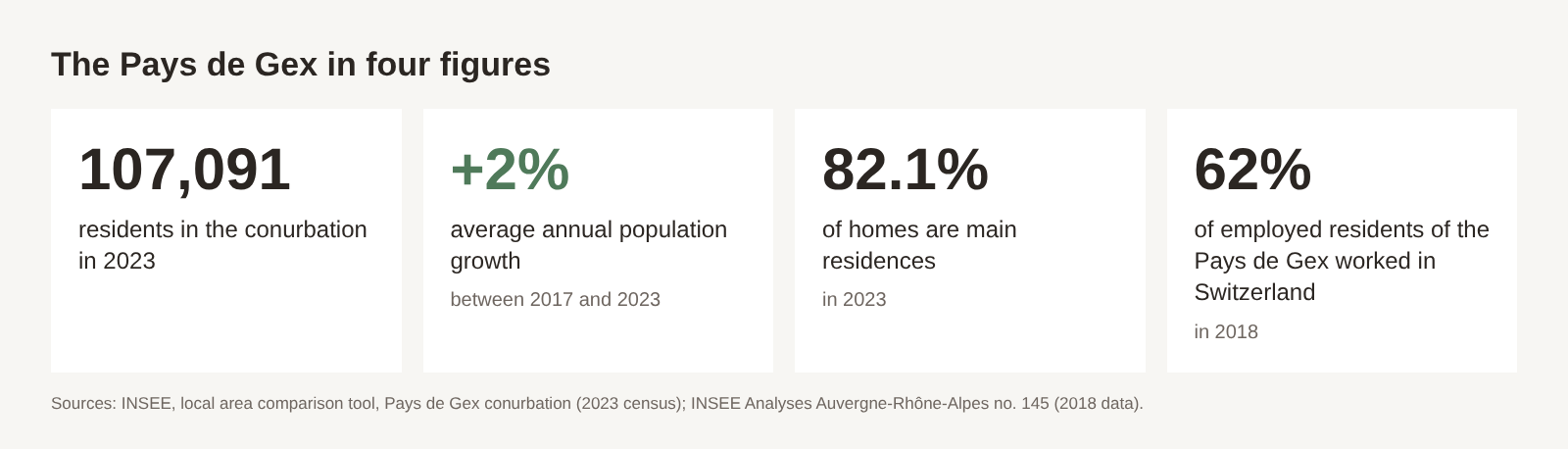
According to INSEE, the French national statistics office, 82.1% of homes in the conurbation were main residences in 2023. The area then had 107,091 residents, with average annual population growth of 2% between 2017 and 2023. (1)
This growth has historically been fuelled by the economic appeal of neighbouring Switzerland. In 2018, 62% of employed residents of the Pays de Gex worked in Switzerland, according to INSEE. (2)
Geneva salaries, often significantly higher than those paid in France, have helped to support local buying power and property values.
However, an expensive market is not necessarily a luxury market. A large share of purchases involve family apartments and houses bought as permanent homes, whose prices mainly reflect proximity to Geneva, access to places of work and quality of life.
This distinction is essential to understanding how the market is changing today.
Prices are holding up, but the picture varies
The latest consolidated notary data for the whole of 2025 show that property values in the Pays de Gex are holding up.
The median price of resale apartments stood at €4,800 per m², up 3.7% over one year, while new-build apartments reached €6,180 per m², an increase of 7.1%. For resale houses, the median sale price was €598,400, virtually stable over the year (−0.3%). (3)
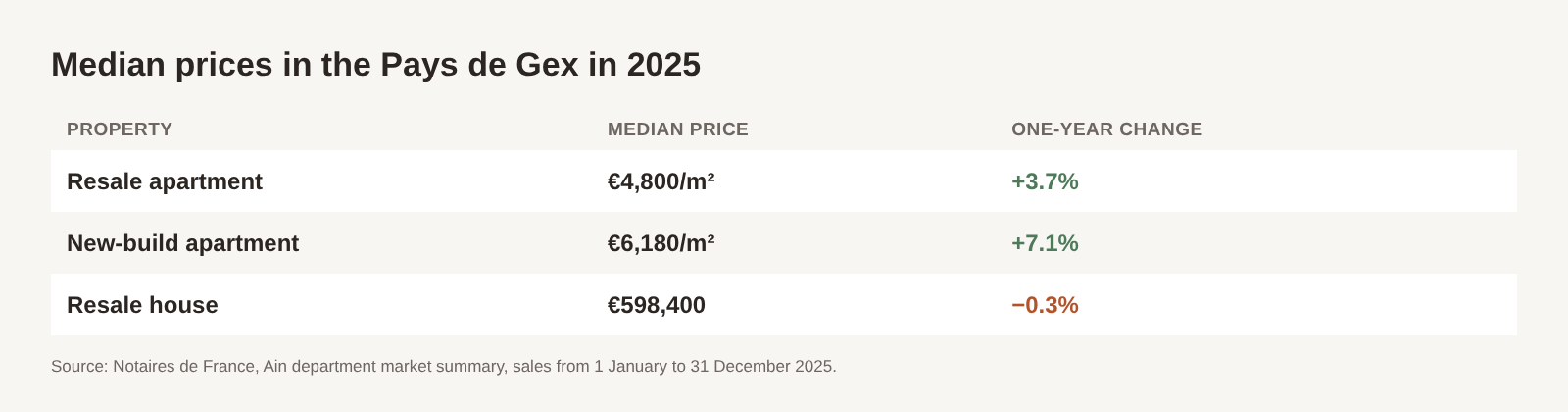
These indicators confirm how highly the area is valued. They should not, however, hide significant differences between towns, property types and the features of each property.
Divonne-les-Bains and some residential areas of Prévessin-Moëns, Grilly or Sauverny have particular advantages linked to their setting and their proximity to Switzerland. By contrast, in the more built-up parts of Ferney-Voltaire, Saint-Genis-Pouilly or Gex, part of the market is driven more by household budgets and by competition between resale and new-build apartments.
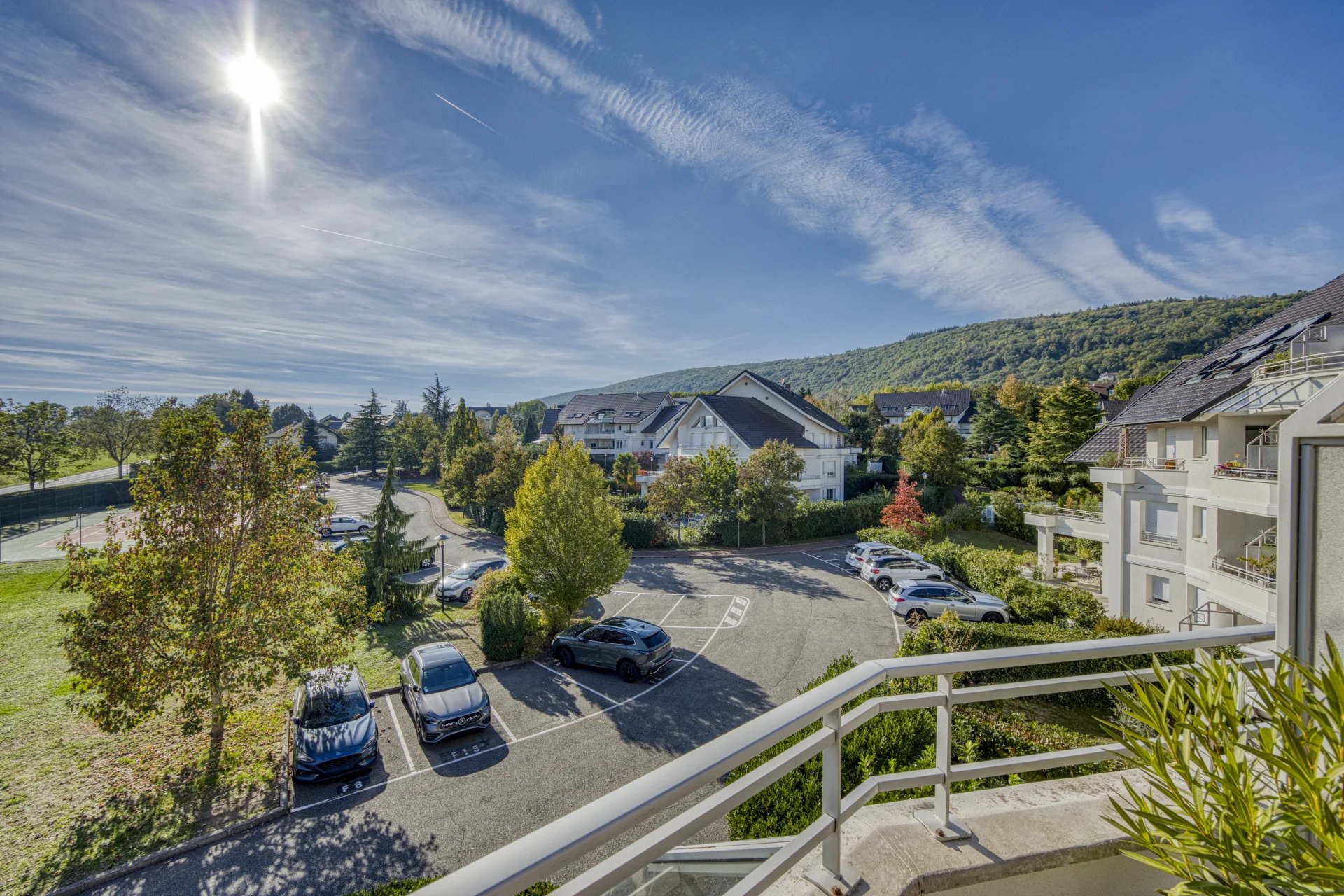
Discover the 97 m² duplex with an open view in Divonne-les-Bains
Homes in need of major energy renovation, with high service charges or in a less sought-after setting may be more open to negotiation.
Area-wide averages alone are therefore not enough to assess the value of a property. They need to be compared with similar transactions, the quality of the location and the properties actually available.
International Geneva: a major shift in the economic context
Changes in employment in Geneva are one of the main points to watch for the Pays de Gex market.
The situation is nonetheless mixed. At the end of June 2026, the canton of Geneva had 118,067 foreign cross-border workers in employment, a figure still rising slightly, by 0.4% over the quarter. Meanwhile, the cantonal unemployment rate reached 5.3% in September 2026, against 3% for Switzerland as a whole. (4)
The Geneva economy therefore remains a key driver of cross-border employment, but some sectors are going through a more fragile period.
This is particularly true of international organisations.
Budget restrictions and reduced contributions from several countries, notably the United States, have led to job cuts, restructuring and fewer recruitment prospects.
In September 2026, the Swiss Federal Department of Foreign Affairs reported a 9.1% fall in employment in the international sector, while highlighting the measures taken to preserve Geneva's appeal. (5)
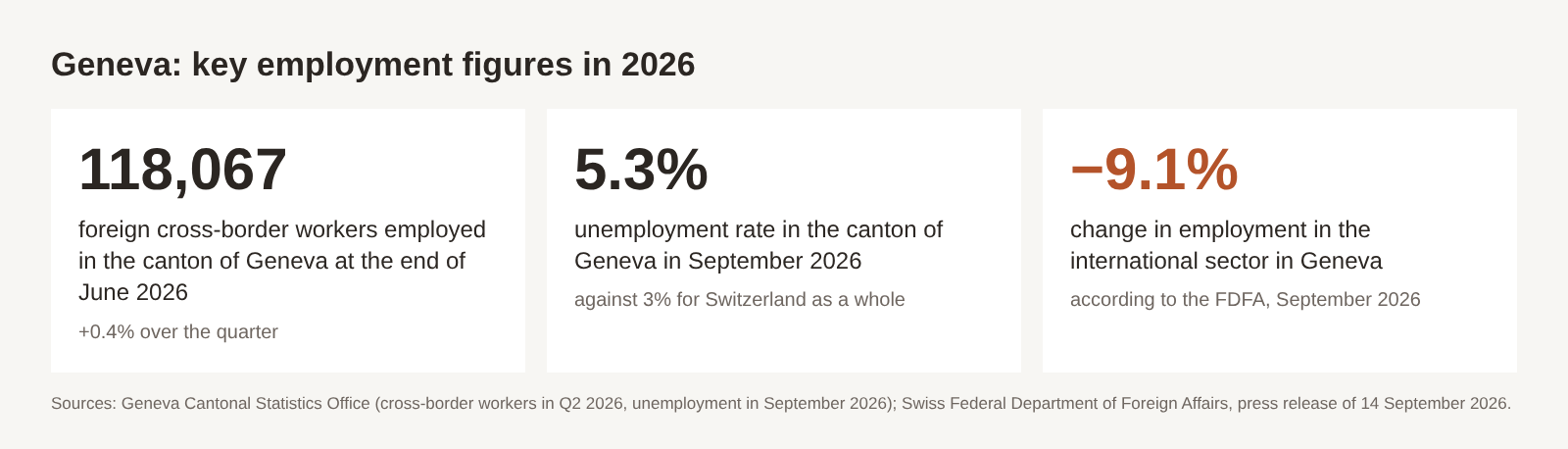
These changes can have a direct impact on plans to buy a home: shorter contracts, less career visibility, postponed purchases or uncertainty about staying in the region for the long term.
Administrative constraints add to these economic factors. An investigation published on 9 October 2026 by Geneva Solutions highlights the visa and residence difficulties faced by non-European staff of international organisations who wish to live in France, particularly in the Pays de Gex. The statistical scale of this phenomenon remains unknown, however. (6)
It would be going too far to assume that all cross-border housing demand is affected in the same way. The private, scientific and technology sectors also contribute to the diversity of the job market.
Nevertheless, for the households concerned, reduced job security can translate into greater caution in buying decisions and less predictable residential mobility.
The Swiss franc and mortgages: effects that partly offset each other
The currency situation remains a decisive factor in the purchasing power of cross-border buyers.
On 29 October 2026, the European Central Bank's reference rate stood at 0.9222 Swiss francs to the euro, or around €1.084 for one Swiss franc. (7)
A strong Swiss franc automatically boosts the purchasing power in euros of households paid in that currency. This advantage can help to support demand for property in France.
It is not enough, however, to cancel out the effects of borrowing conditions or job uncertainty.
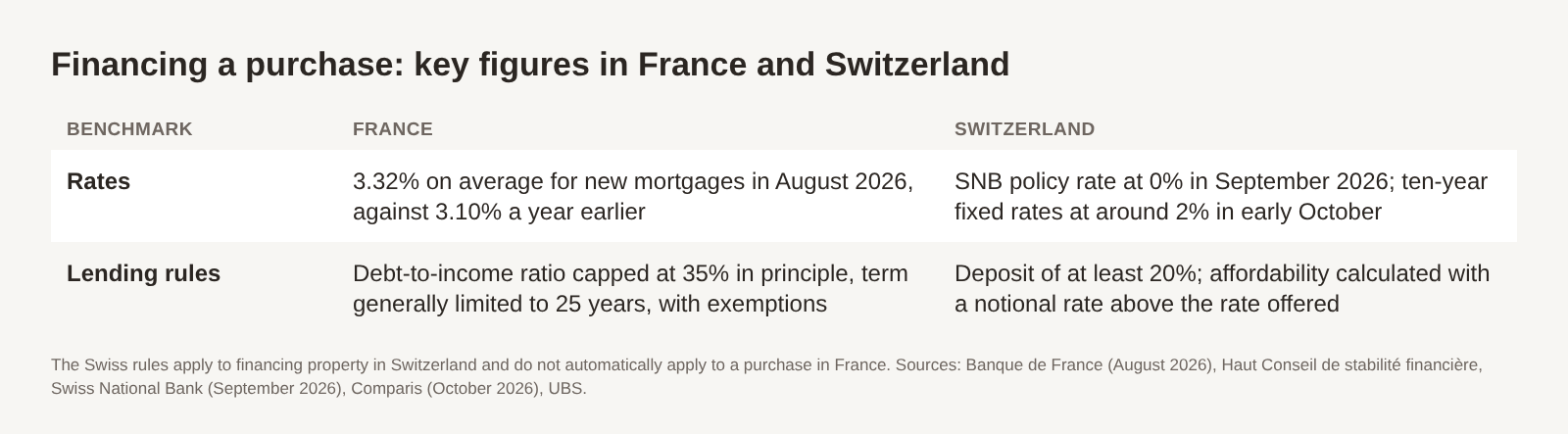
In France, according to the Banque de France, the average rate on new mortgages, excluding renegotiations, reached 3.32% in August 2026, against 3.10% a year earlier. (8)
Lenders remain subject to a strict lending framework, including a debt-to-income ratio capped at 35% in principle and a loan term generally limited to 25 years, subject to the exemptions and exceptions provided for by the regulations. (9)
The monetary situation in Switzerland is different. The Swiss National Bank kept its policy rate at 0% in September 2026. On the Swiss mortgage market, average indicative rates for ten-year fixed loans stood at around 2% in early October. (10)
Lending conditions are not directly comparable, however: in Switzerland, home loans generally require a deposit of at least 20% and a prudent affordability calculation, which notably uses a notional interest rate higher than the rate actually offered.
These rules apply to financing property in Switzerland and do not automatically apply to buying a property in France. (11)
For cross-border buyers, purchasing capacity therefore depends on a set of factors: the currency of their salary, income stability, their deposit, the loan term and the bank's risk policy.
The Swiss franc supports purchasing power, but job security and access to financing remain decisive in completing a purchase.
New-build property: a new deal for housing supply
Changes in supply are another important issue, particularly in Ferney-Voltaire.
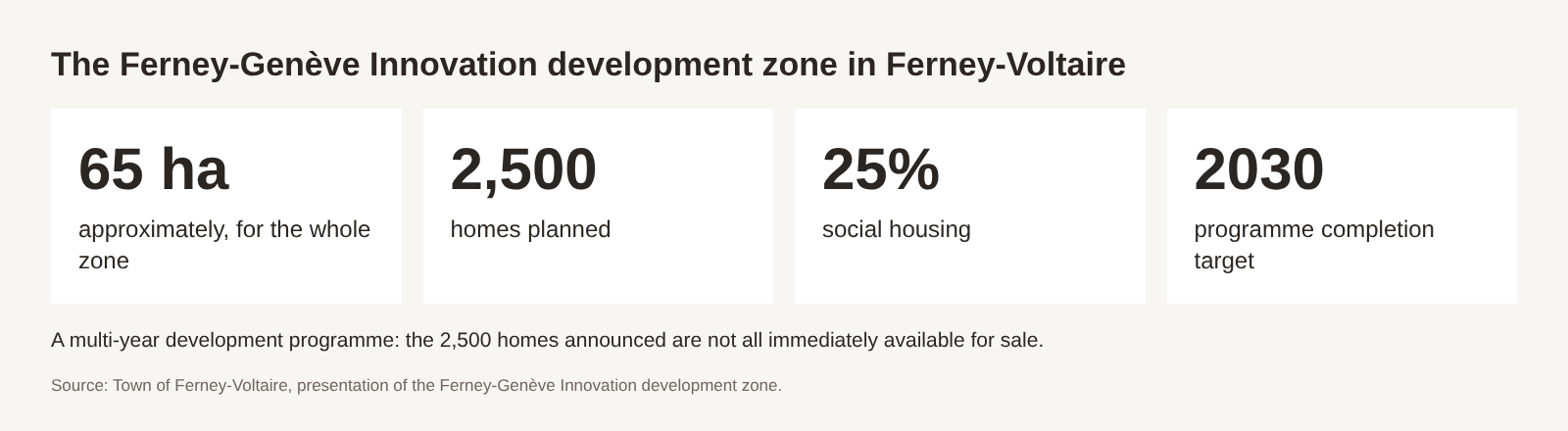
The Ferney-Genève Innovation development zone is one of the area's main urban projects. Covering around 65 hectares, it plans some 2,500 homes by 2030, 25% of them social housing, along with public facilities, business premises and new services. (12)
This development supports the residential and economic growth of the area. It could also gradually change the competitive landscape in some segments of the market.
New-build apartments have specific selling points: energy performance, contemporary finishes, comfort, construction guarantees and, depending on the development, the commercial incentives offered by developers.
Faced with this supply, resale apartments need to justify their positioning with other strengths: location, volumes, setting, architectural character or a price advantage that may help to fund a renovation.
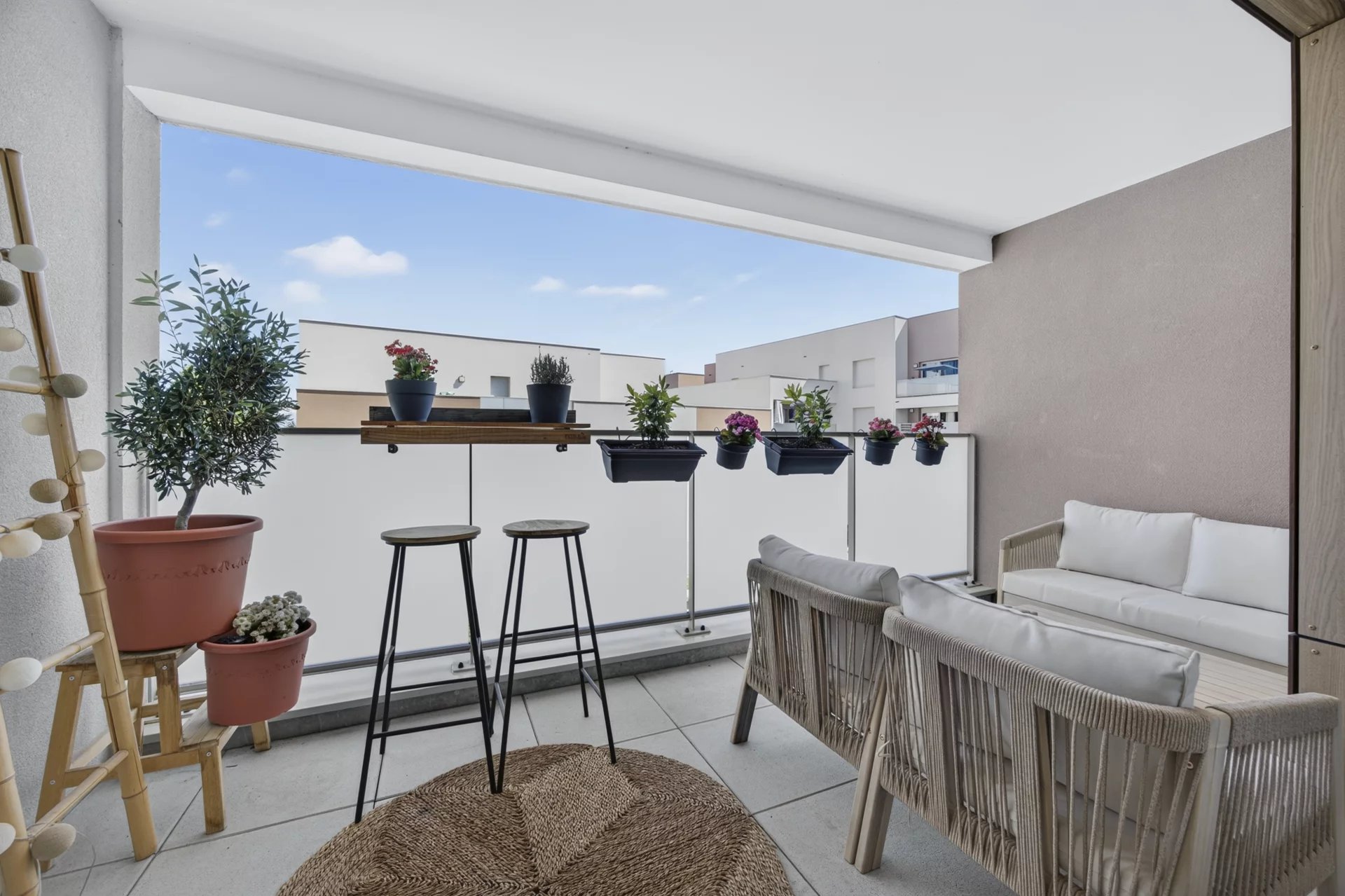
Discover the 63 m² apartment with a south-facing terrace in Ferney-Voltaire
That said, the 2,500 homes announced in Ferney-Voltaire are part of a multi-year development programme and are not all immediately available for sale.
The real impact on prices will depend on the pace of completions, the number of homes put on the market, their type and how well they match demand.
Over time, this could increase competition for some standard family apartments, without necessarily affecting detached houses or truly rare properties in the same way.
High-end property: scarcity remains a differentiating factor
The high-end market in the Pays de Gex deserves a separate analysis.
Villas with an exceptional setting, open views over Lake Geneva or the Alps, fine grounds, remarkable architecture or truly exceptional features do not respond to the same drivers as the mainstream residential market.
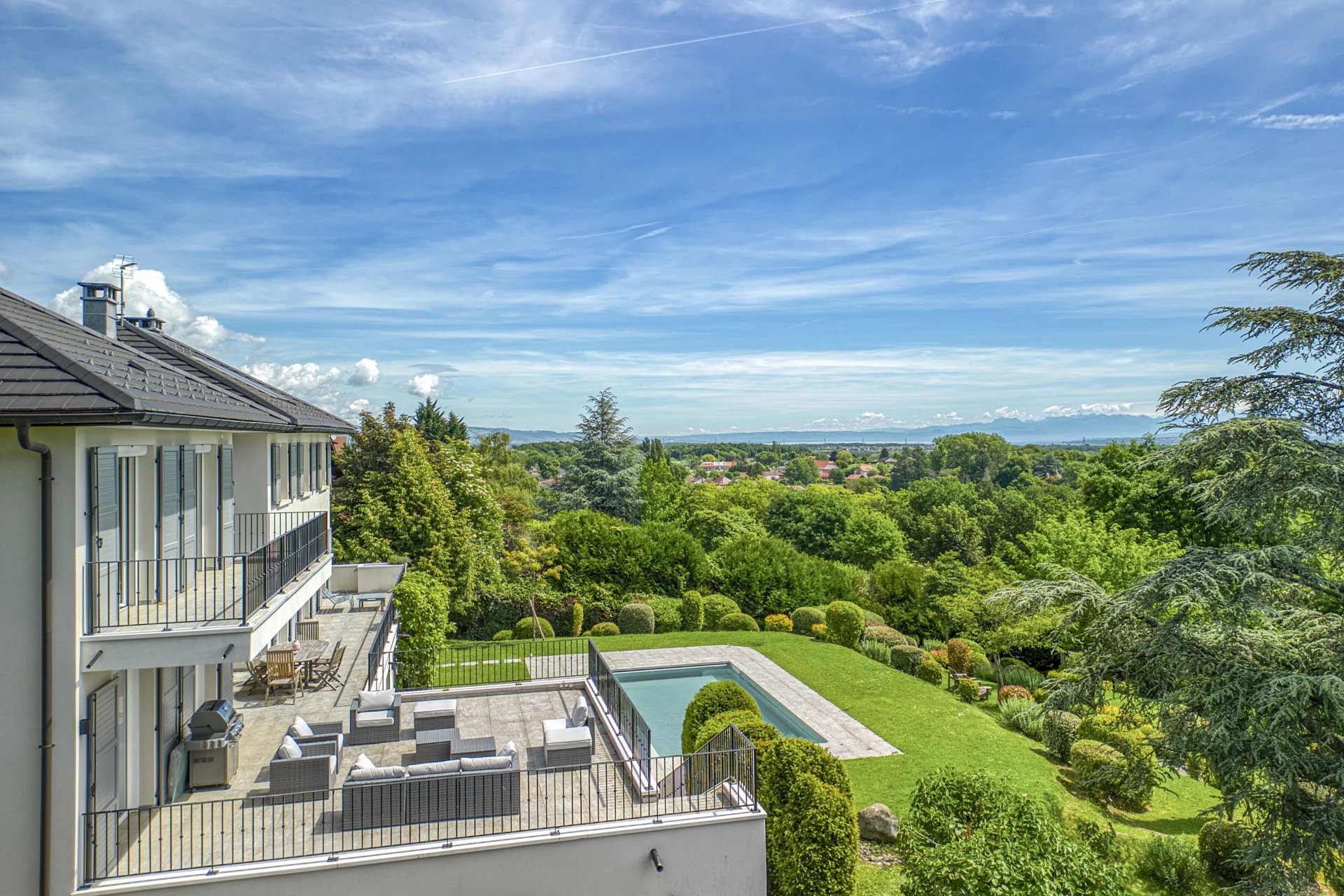
Discover the villa with 2,836 m² of grounds and views of Mont Blanc and Lake Geneva in Grilly
Their appeal lies more in a combination of location, privacy, architectural quality and scarce land.
These buyers may have a stronger asset base and, in some cases, depend less on mortgages. They are not, however, immune to economic uncertainty, career changes or international wealth-management decisions.
Above all, a high price alone does not make a property exceptional. A house whose price is high mainly because of its location near the border still competes with other comparable residential properties.
Conversely, a property with features that are hard to replicate can attract more specific demand, sometimes less directly linked to average market indicators.
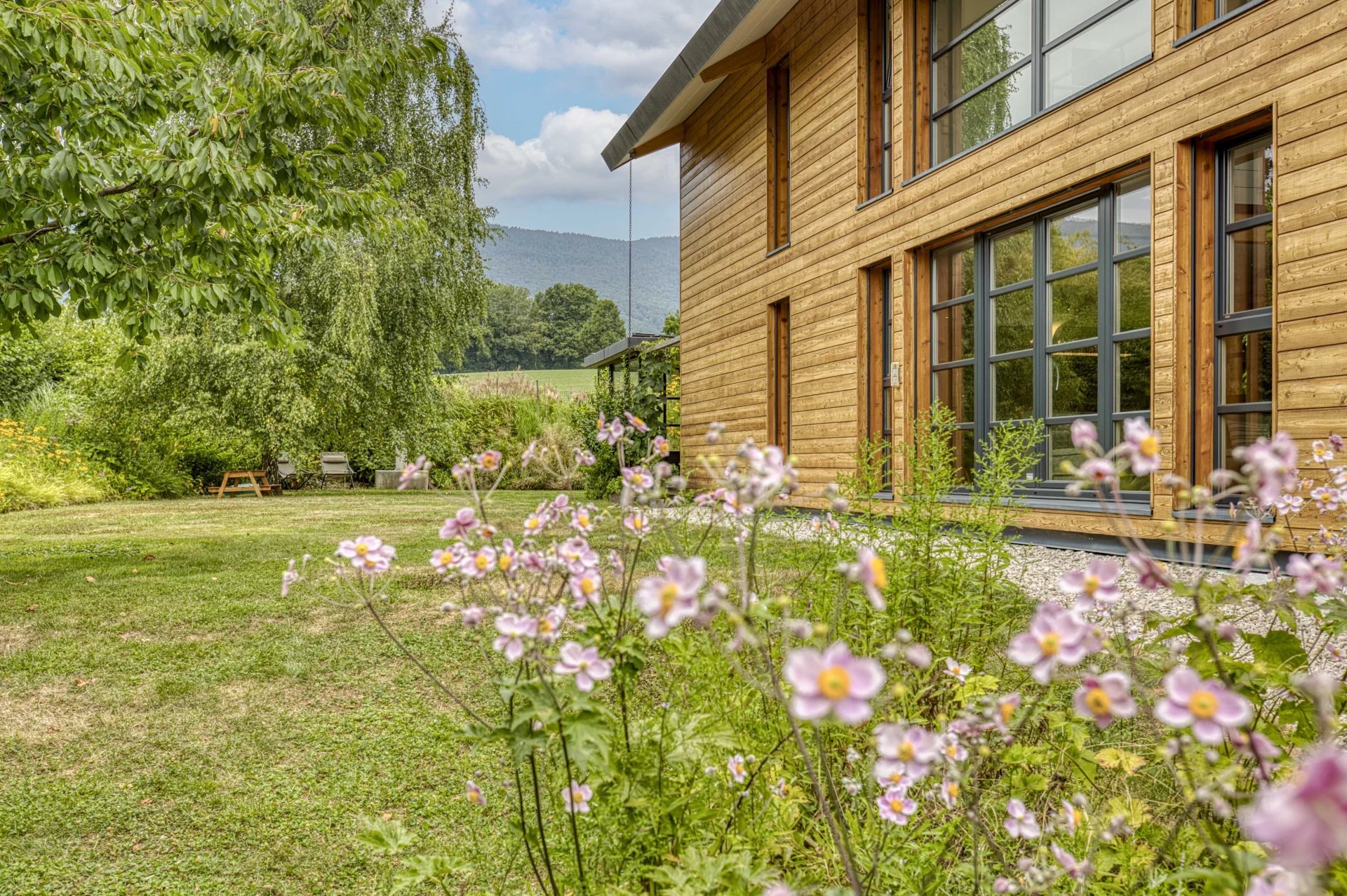
Discover the architect-designed villa with a 1,697 m² landscaped garden in Divonne-les-Bains
Caution is nonetheless called for: the public statistics available do not make it possible to isolate, with sufficient reliability, the trend in transactions involving genuine prestige property alone in the Pays de Gex.
Analysis of this segment should therefore focus on relevant sale references, the features of each property and the real depth of demand, rather than on general averages.
What is the outlook for 2027?
The Pays de Gex retains significant structural advantages: proximity to Geneva, its natural setting, its residential appeal and high incomes for some households.
These fundamentals do not disappear with the current economic uncertainty.
However, the weakening of some international jobs, lenders' caution and the gradual change in housing supply call for a more selective reading of the market.
Three trends deserve particular attention: the ability of the Geneva economy to preserve and renew its jobs, the actual timetable for new-build completions and the purchasing power of cross-border buyers.
For sellers, this context makes getting the initial pricing right even more essential. A valuation based solely on asking prices or on the market's past performance may not reflect the demand that can actually afford to buy.
For buyers, current changes may open up room for negotiation, particularly when a property's features do not fully justify its pricing.
The Pays de Gex property market is thus entering a phase in which value depends less on proximity to Geneva alone than on the match between a property, its real qualities, its price and the expectations of buyers who have become more discerning.
It is this differentiated reading of the markets, from family homes to exceptional properties, that underpins the support BARNES Mont-Blanc provides.
To explore any of these figures further, or to move forward with a purchase or sale, the consultants at our BARNES agency in Divonne-les-Bains are at your disposal. We also invite you to discover all our properties for sale in the Pays de Gex:
- Properties for sale in Divonne-les-Bains
- Properties for sale in Grilly
- Properties for sale in Gex
- Properties for sale in Cessy
- Properties for sale in Ferney-Voltaire
- Properties for sale in Prévessin-Moëns
- Properties for sale in Saint-Genis-Pouilly
Sources and references
Analysis carried out in October 2026. The reference dates of the statistics are given in the body of the article.
- INSEE, local area comparison tool, Pays de Gex conurbation, published on 27 August 2026 (2023 census), in French.
- INSEE, cross-border workers: six profiles of commuters to Switzerland, INSEE Analyses Auvergne-Rhône-Alpes no. 145 (2018 data), in French.
- Notaires de France, departmental property market summary, Ain, period from 1 January to 31 December 2025, published in 2026. Median prices and trends for resale and new-build property, in French.
- Geneva Cantonal Statistics Office, statistics on cross-border workers (Q2 2026) and unemployment (September 2026), in French.
- Swiss Federal Department of Foreign Affairs, International Geneva adapts to structural change, press release of 14 September 2026, in French.
- Geneva Solutions, Sarah Zeines, French border rules shake up international Geneva recruitment, 9 October 2026.
- European Central Bank, EUR/CHF reference exchange rate on 29 October 2026.
- Banque de France, loans to individuals, August 2026, published on 6 October 2026, in French.
- Haut Conseil de stabilité financière (French financial stability board), mortgage lending rules, in French.
- Swiss National Bank, monetary policy assessment of 24 September 2026, in French; Comparis, indicative mortgage rates on 1 October 2026.
- UBS Switzerland, property financing: how much equity do you need?, standard Swiss mortgage rules and criteria, in French.
- Town of Ferney-Voltaire, presentation of the Ferney-Genève Innovation development zone and its programme to 2030, in French.
